
National Museum
The museum that tells you who Norway is
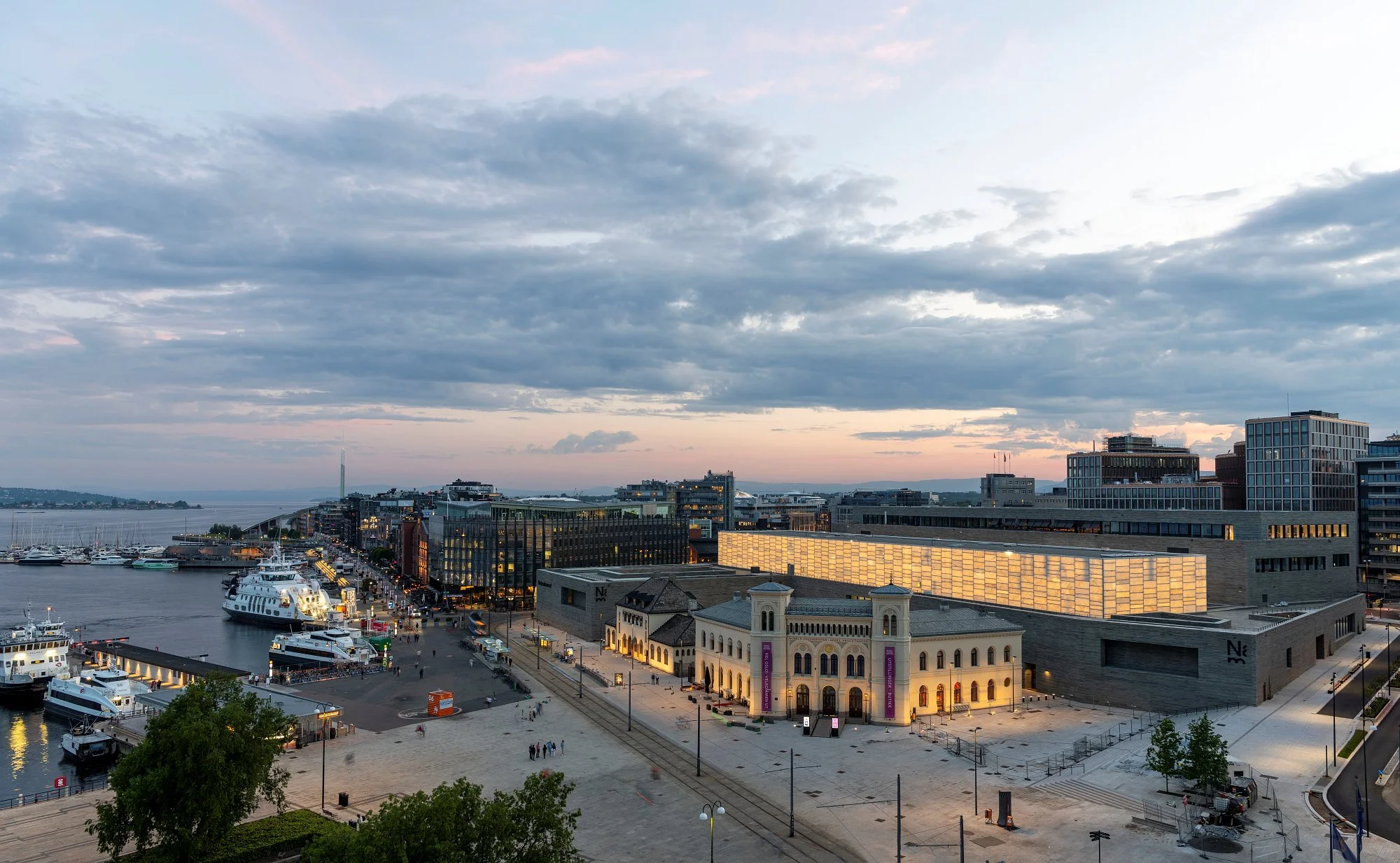
Photo: Nasjonalmuseet / Børre Høstland
The museum Oslo had been waiting for
Nasjonalmuseet is not a side attraction or a polite cultural extra. It is one of the defining buildings and institutions in contemporary Oslo. The new museum opened on 11 June 2022 at Brynjulf Bulls plass 3, near City Hall, Aker Brygge and the fjord, and brought together collections that had previously been spread across the National Gallery, the Museum of Contemporary Art, the Museum of Decorative Arts and Design, and part of the Museum of Architecture. That move matters. It means the museum does not feel fragmented. You are not moving between disconnected departments; you are moving through a fuller national story.
This is also why the museum feels so convincing. It does not present Norwegian culture as a narrow historical tale or a parade of masterworks. Instead, it shows how painting, furniture, textiles, architecture, craft and contemporary design all speak to the same questions: what kind of country Norway has been, what it values, and how it wants to be seen now. That breadth is one of Nasjonalmuseet’s greatest strengths.
A building with proper Oslo confidence
The building itself gets the tone exactly right. Designed by Klaus Schuwerk of Kleihues + Schuwerk, the museum is large, calm and self-assured rather than showy. It has a total area of 54,600 square metres, with major spaces for both permanent and changing exhibitions, and it was conceived not just as a home for art but as a public place within the city. That is why it works so well. It does not sit outside Oslo; it participates in Oslo.
There is something deeply fitting about its material language too. The museum carries a sense of Nordic solidity without becoming severe. Inside, the scale is generous but not exhausting. Outside, the setting by the waterfront gives the whole institution more air and light than many national museums manage. And then there is the Light Hall, the museum’s signature upper-level exhibition space: 2,400 square metres of luminous architectural ambition that gives temporary exhibitions a seriousness and presence they might not have elsewhere.
More than a museum for people who “like museums”
The clever thing about Nasjonalmuseet is that it is legible. Serious, yes. Dense with meaning, absolutely. But never wilfully obscure. You do not need specialist knowledge to get something out of it. The museum is built for first-time visitors, curious locals, art lovers and people who simply want one excellent cultural stop in central Oslo. The routes through the galleries are varied, the objects are presented across periods and disciplines, and the institution has clearly been designed to accommodate different levels of attention and different kinds of visitor.
That makes it one of the most useful museums in the city. You can spend a focused ninety minutes here and feel enriched, or give it half a day and still leave with more to come back for. It is both a strong first visit and a museum that rewards repeat visits, which is rarer than it should be.
Yes, The Scream matters — but it is not the whole story
For many visitors, Edvard Munch is the magnetic pull, and rightly so. Nasjonalmuseet holds one of the most important Munch collections in the world, including The Scream from 1893. It remains one of the great cultural icons in Norway, and seeing it in person still lands with real force. Not because it is famous, but because the work itself is so emotionally precise, so visually unstable, so alive.
But one of the best things about Nasjonalmuseet is that it refuses to become a one-work museum. You may come for Munch and leave talking about architecture, Norwegian design, decorative arts, modern painting or an object you had never heard of before. The museum’s collection stretches from antiquity to the present day, and its online collection alone includes more than 50,000 works. That scale changes the visit. It turns what could have been a trophy stop into a broader encounter with how a country sees beauty, history, public life and itself.
Why it feels so right in Oslo
Some museums are important but oddly detached from the place around them. Nasjonalmuseet is not like that. It feels anchored in Oslo’s current identity: outward-looking, design-aware, culturally serious, increasingly international, but still comfortable with understatement. The museum square, the nearby waterfront, the view lines towards City Hall and the harbour, the movement of people through the area — all of it gives the institution a distinctly urban life. It is one of the clearest examples of Oslo getting the balance right between civic space and cultural ambition.
That is why it suits so many kinds of visitor. It works for travellers who want a major museum experience, for locals who want to spend an afternoon somewhere substantial, and for anyone trying to understand what modern Oslo has become. It is not old-fashioned prestige culture. It is something better: a museum that feels fully used, fully public and fully part of the city around it.
How to visit it well
The best advice is simple: do not rush it. Give the museum enough time to unfold. Walk the building properly. Notice how the spaces change. Let yourself move between large national narratives and smaller, stranger details. And do not make the mistake of treating it as a place to “tick off” before heading elsewhere. Nasjonalmuseet is the elsewhere. It is one of the places in Oslo where the city becomes most readable.
If you are planning around practicalities, the museum’s official visitor information is the right place to check tickets, opening details and current access information before you go. But editorially, the stronger point is this: if you only have room for one major museum in Oslo, make it Nasjonalmuseet. It gives you the widest frame, the clearest sense of place and one of the most satisfying cultural experiences in the city.
Final word
Nasjonalmuseet succeeds because it does not try too hard to impress. It simply has the weight, quality and confidence to stand where it stands. It is national without being stiff, contemporary without being fashionable, and ambitious without losing the visitor. For Oslo, that makes it more than a museum. It makes it one of the city’s clearest statements about who it is.