
The Stovner Tower: Oslo’s Elevated Walk Through the Treetops
On the wooded rise of Fossumberget in Stovner, far from the postcard clichés of central Oslo, one of the city’s most quietly remarkable public attractions spirals into the air. Stovnertårnet — the Stovner Tower — is not a tower in the conventional sense. It is a graceful, elevated walkway: a circular timber structure that rises gently through the trees, giving visitors the sensation of walking upward with the landscape rather than climbing away from it.
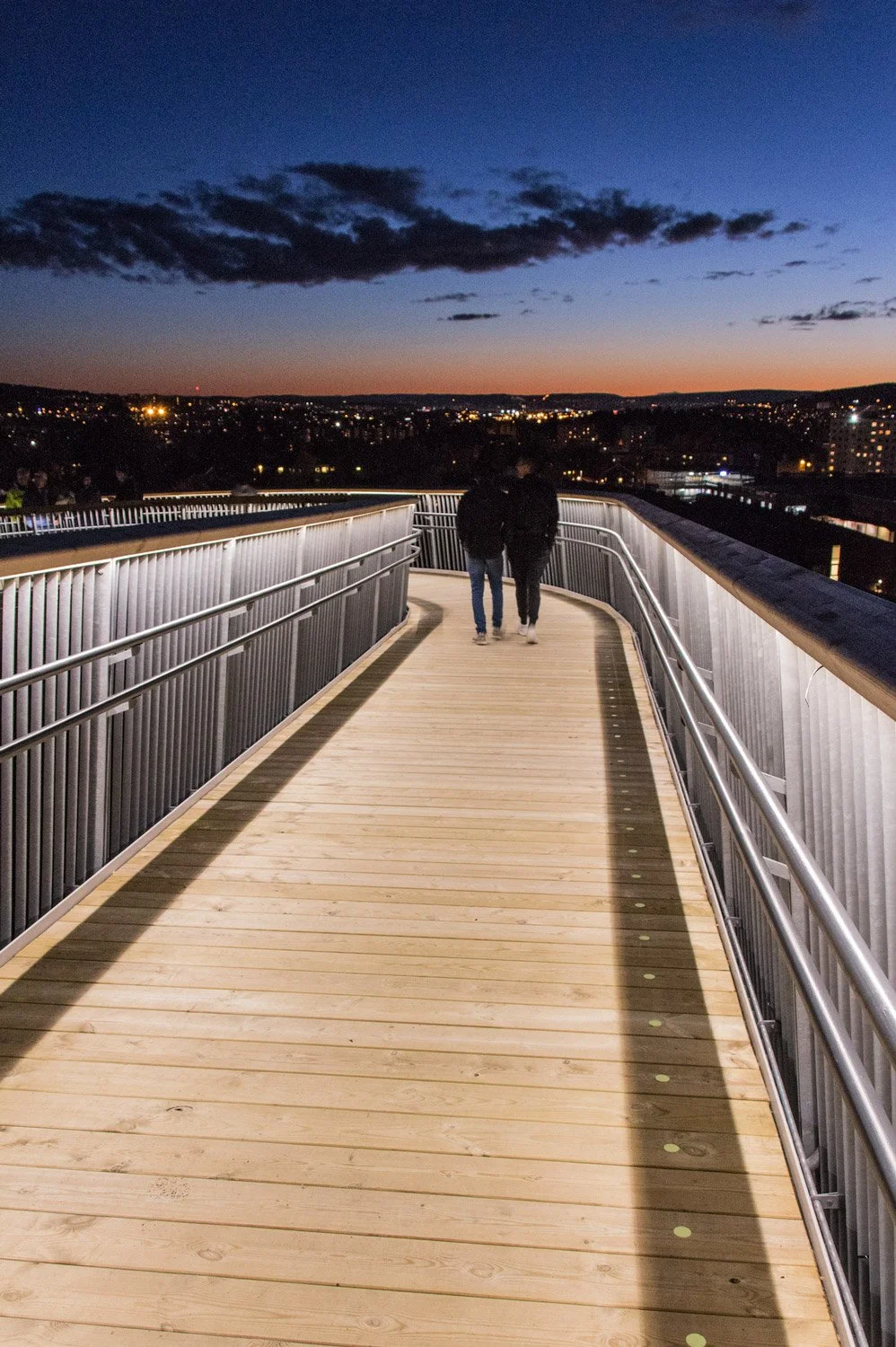
At around 260 metres long and rising 15 metres above the ground, Stovnertårnet is often described as Norway’s longest tower — not because it is tall, but because the ascent itself is the experience. Its long, sloping walkway replaces stairs with a calm, continuous route, making the journey to the top accessible, social and unhurried.
A different view of Oslo
Stovnertårnet offers a view of Oslo that feels both intimate and expansive. From the walkway, the surrounding trees are close enough to become part of the architecture. Higher up, the landscape opens toward Groruddalen, the hills around Stovner and, on clear days, the Oslofjord in the distance. The tower sits at Fossumberget, close to Stovner Senter, and is integrated into the local walking routes around the area.
What makes the experience memorable is not only the panorama, but the way the tower reaches it. Instead of presenting a single dramatic lookout point, Stovnertårnet creates a gradual sequence of views. The visitor moves slowly through changing heights, light, branches and open sky, with platforms along the route offering places to pause, sit and take in the surroundings.
Architecture inspired by flight
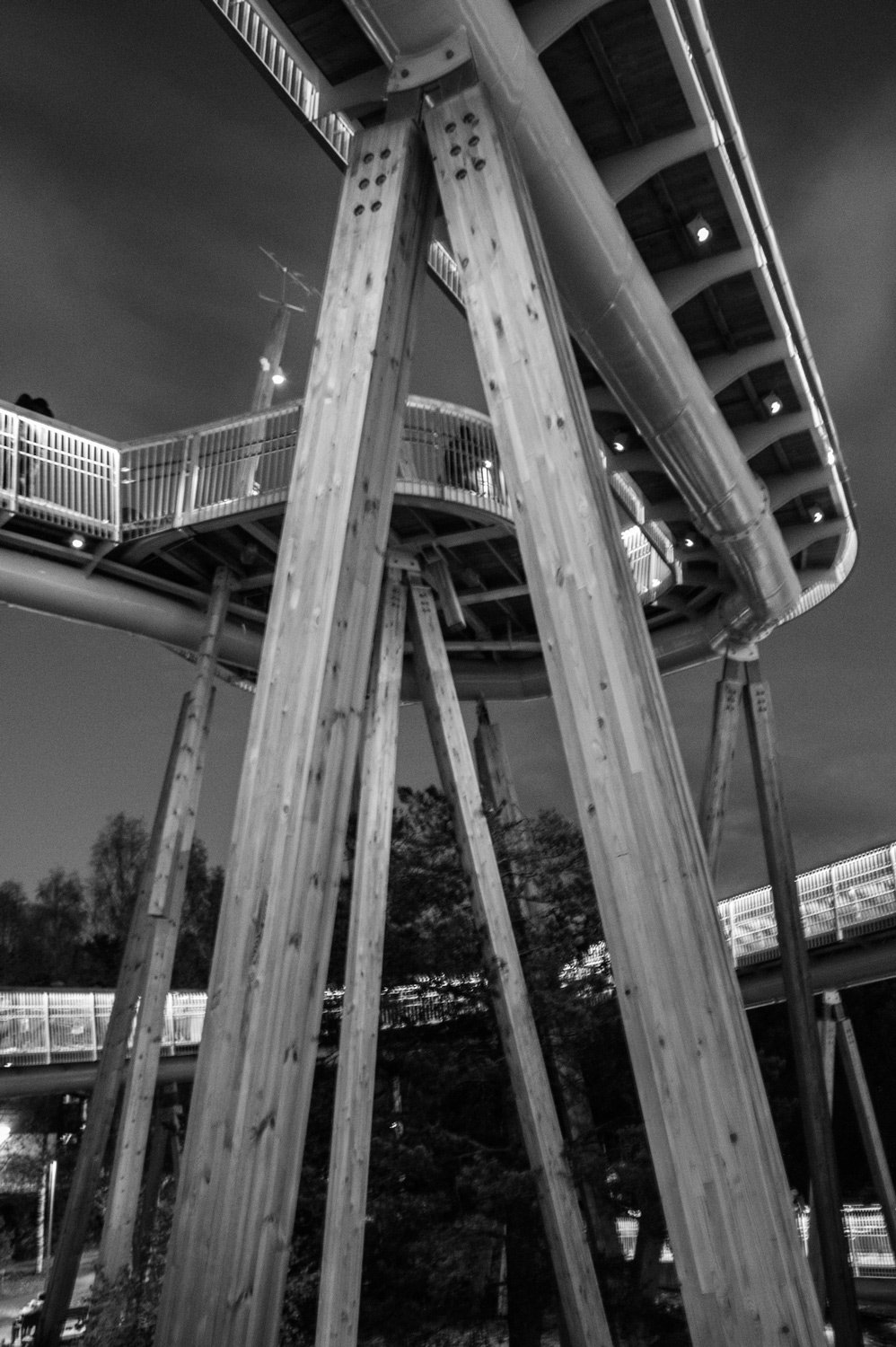
The tower was designed by LINK Arkitektur Landskap and completed in 2017. The concept is inspired by the flight of a bird rising into the air, with platforms along the route interpreted as nest-like resting places. The load-bearing timber columns are intended to echo trees and branches, helping the structure settle into the woodland rather than dominate it.
This gives Stovnertårnet a rare architectural softness. Its form is playful, almost cinematic, yet the design is also careful and civic-minded. The walkway is secured with high railings, and the project places strong emphasis on universal design, allowing visitors with different levels of mobility to share the same route and the same view. DOGA describes the tower as a meeting place and urban nature attraction built on principles of inclusive design.
A public landmark with a social purpose
Stovnertårnet is more than a scenic viewpoint. It was developed as part of a broader transformation around Stovner, intended to add lasting local qualities and create an attraction for both residents and visitors. The project was connected to area development efforts in Stovner and the wider Groruddalen initiative, with the aim of strengthening local outdoor life, recreation and participation.
That social ambition is central to the tower’s success. It is a landmark people can actually use — not a monument to be admired from a distance. Children, families with prams, wheelchair users, elderly visitors, local residents and architecture enthusiasts can all move through the same structure. In 2020, Stovnertårnet received DOGA’s Innovation Award for Inclusive Design, recognising its landscape architecture and inclusive design qualities.
Practical guide: visiting Stovnertårnet
Location: Stovnertårnet is located at Fossumberget in Stovner, behind Stovner Senter. Visit Norway lists the address area as Fossumberget, Stovner, Oslo.
Opening hours and price: The tower is open to the public around the clock, and entrance is free.
Getting there: The nearest metro station is Stovner. According to Visit Norway, the tower is about 600 metres from Stovner metro station, and the journey from Jernbanetorget to Stovner takes about 25 minutes on metro line 5. From the surrounding area, the tower can be reached by footpaths from Stovner Senter, Karl Fossums vei, Fossumberget or Olaus Fjørtofts vei.
Accessibility: The tower is designed around universal access, with a gently rising walkway rather than stairs. The route is intended to be accessible for visitors using wheelchairs or prams, and the design includes safety railings and resting platforms along the way.
Best time to visit: Daytime gives the clearest views over Stovner, Groruddalen and toward the Oslofjord. Evening visits offer a different atmosphere, as the tower’s lighting highlights the circular movement of the structure and helps make the surrounding area feel safer and more accessible after dark.
What to combine it with
A visit to Stovnertårnet can easily become part of a wider walk in the area. The tower is connected to local paths around Fossumberget and lies close to the activity park Jesperudjordet for alle, which is part of the broader transformation of the Stovner centre area.
For visitors who want to see a different side of Oslo, this is one of the city’s most rewarding small excursions. It shows a greener, more local, more everyday Oslo — a place where architecture, landscape and public life meet without spectacle, but with real generosity.
Why Stovnertårnet is worth the journey
Stovnertårnet is not Oslo’s tallest viewpoint, nor is it trying to be. Its value lies in something subtler: the democratic elegance of the climb, the quiet drama of moving through treetops, and the fact that a peripheral residential district has been given a landmark of real architectural quality.
It is a destination for families, photographers, walkers, design lovers and anyone curious about how contemporary public architecture can shape local pride. In a city celebrated for fjord views, museums and waterfront icons, Stovnertårnet offers something different: a slow ascent, a shared experience and a beautiful reminder that great urban attractions do not have to stand in the centre to matter.