
Queen Sonja Art Stable
Visit Queen Sonja Art Stable
Queen Sonja Art Stable is located in the Palace’s former stables. Here, visitors can experience the Royal Collections, often presented in dialogue with contemporary art. The stables date back to 1848, but were opened as a venue for culture, art, and history in 2017.
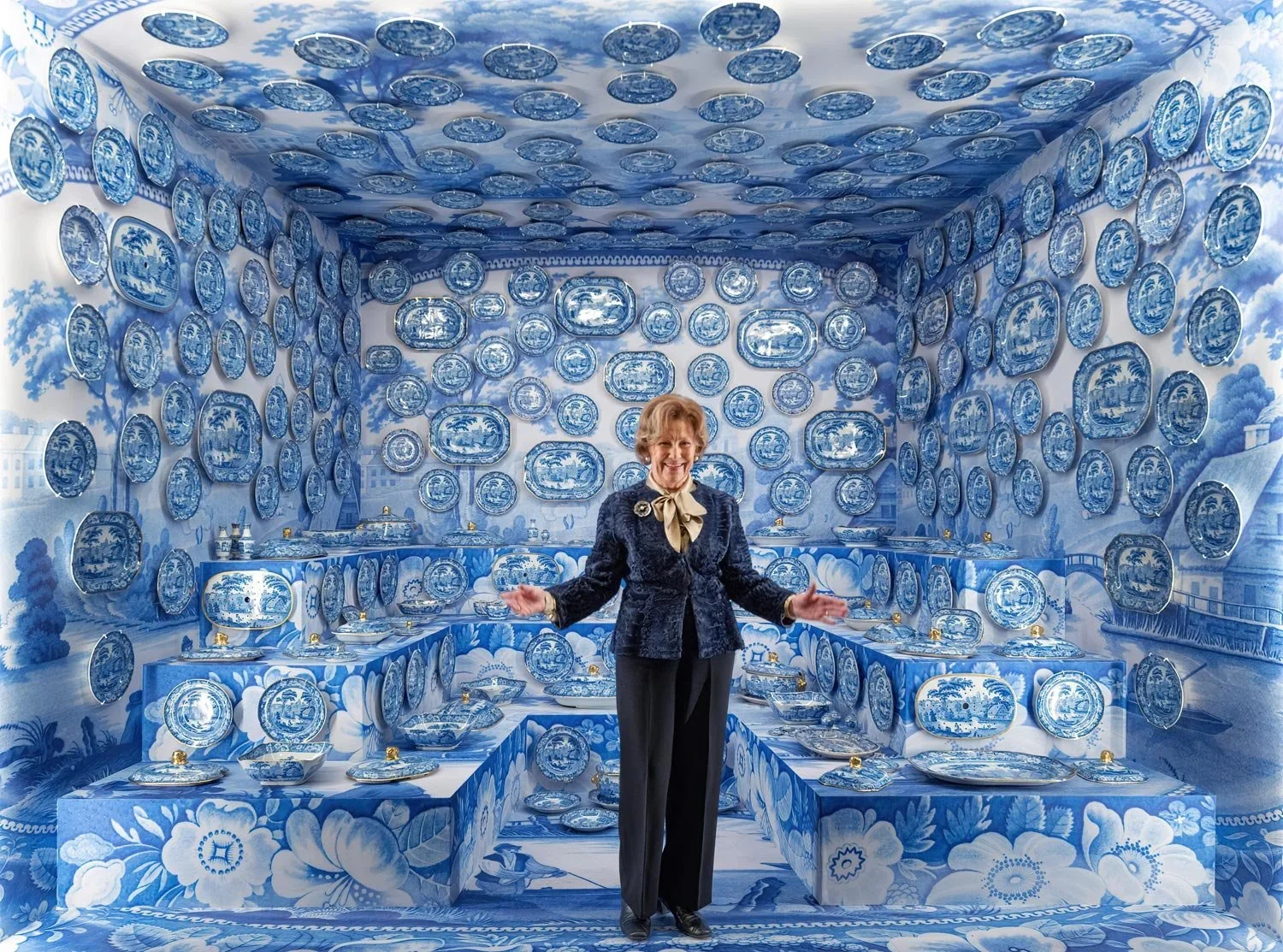
Dronning Sonja omgitt av Slottets eldste servise – det blåhvite Palé-serviset fra 1815 – ved åpningen av utstillingen "Ved Kongens bord". Photo: Øivind Möller Bakken, Det kongelige hoff
Queen Sonja Art Stable in Oslo: A Refined Guide to Royal Heritage, Contemporary Art and One of the Capital’s Most Elegant Hidden Cultural Spaces
Tucked discreetly behind the Royal Palace, at Parkveien 50 in central Oslo, Queen Sonja Art Stable is one of the city’s most distinctive cultural venues. Known in Norwegian as Dronning Sonja KunstStall, it occupies the Palace’s former stable buildings — a place once reserved for royal horses, carriages and equestrian life, now transformed into an intimate arena for art, history, craft and royal cultural heritage.
Opened to the public in 2017, the Art Stable represents a rare meeting point between Norway’s monarchy and the country’s artistic life. Its exhibitions often draw from the Royal Collections and are frequently presented in dialogue with contemporary art, giving visitors access to objects, stories and interiors that were once part of a closed royal world.
A Royal Stable Reimagined
The history of the building is inseparable from the Royal Palace itself. The Palace stables were completed in 1848 and later expanded by King Haakon VII and Queen Maud in 1911. Queen Maud, who had a deep interest in horses and equestrian culture, helped shape the stable environment that would become one of the most atmospheric spaces in the Palace complex.
For decades, the stables were not open to the public. After the horses left for the last time in 1940, parts of the building were used for storage and as a garage. The transformation into an art and culture venue came much later, as a gift from King Harald V to Queen Sonja on the occasion of her 80th birthday. The Art Stable officially opened on 4 July 2017, Queen Sonja’s birthday.
The result is not a conventional museum. It is a carefully restored heritage space where the architecture itself remains part of the experience. In the Middle Stable, the old stalls still frame the exhibitions, preserving the memory of the building’s original function. The Royal Harness Room — where saddles, harnesses and carriage equipment were stored — has also been preserved, and is normally open to visitors.
The Riding Hall: A Grand New Chapter
A major expansion came in 2023, when Queen Maud’s former Riding Hall was fully restored and opened to the public. This impressive historic hall measures approximately 800 square metres and has become an important part of the Art Stable’s exhibition and event programme.
The Riding Hall has a layered and dramatic history. During the Second World War, it was used by German forces for police-horse training, and it was later damaged during the 1943 explosion at Filipstad. After years of use as storage, the hall has now been restored in a way that recalls the riding house King Haakon and Queen Maud knew in the early 20th century.
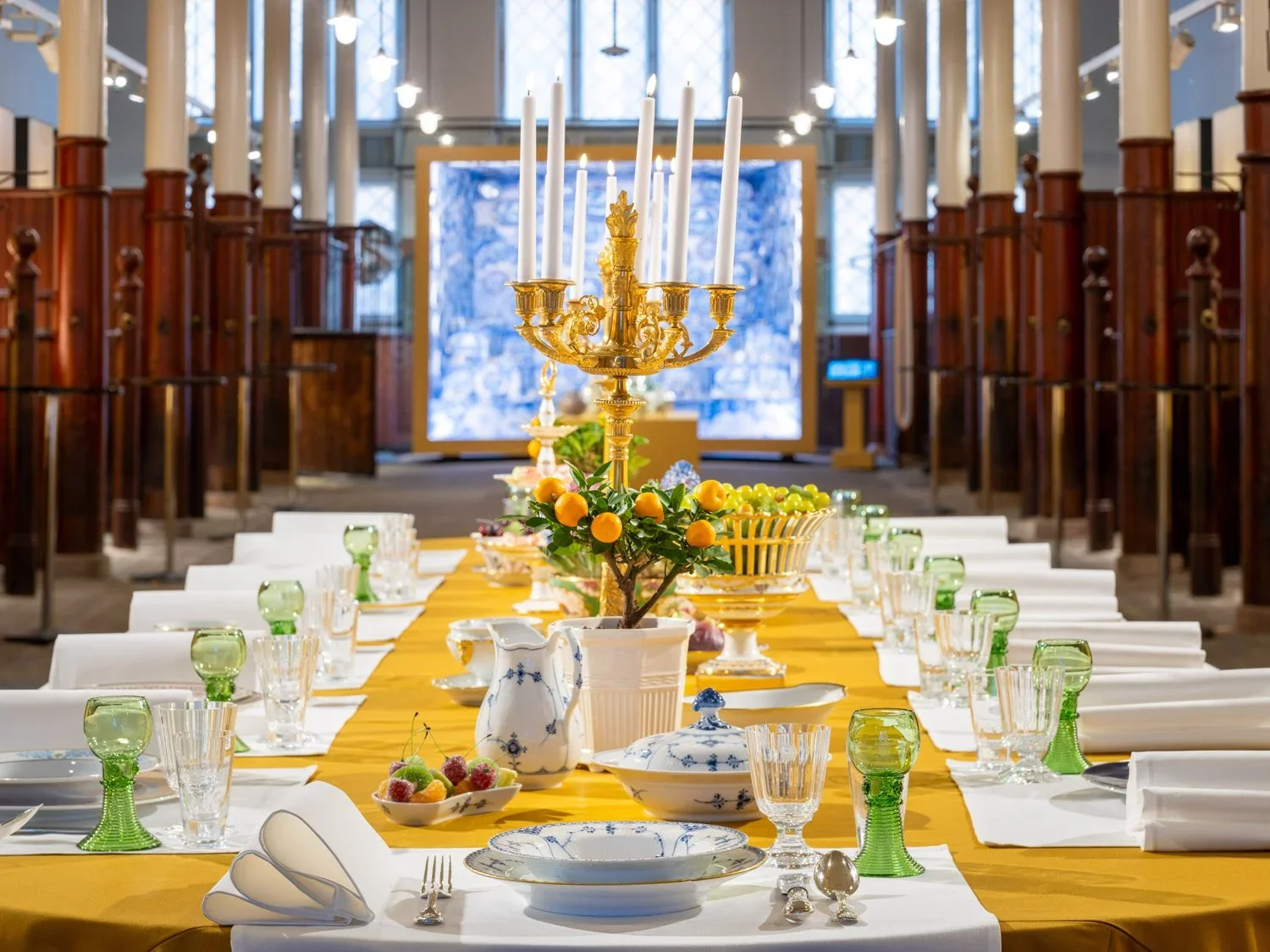
Fra utstillingen "Ved Kongens bord” i Dronning Sonja KunstStall. Photo: Øivind Möller Bakken, Det kongelige hoff
What to See
Queen Sonja Art Stable presents both permanent and temporary exhibitions, as well as lectures, guided tours, concerts and workshops. The themes vary widely, from royal objects and historic vehicles to craft, sculpture, photography, modern art and collaborations with major Norwegian museums.
For 2026, the exhibition “Threads in Time – From the National Tapestries to the Royal Tapestry” highlights Norwegian tapestries created between 1890 and 1955. The exhibition runs from 13 February to 6 December 2026 and presents woven works from the Royal Collections, including pieces connected to Norwegian handicraft traditions, local wool and plant-based dyes.
Why Visit
Queen Sonja Art Stable is ideal for visitors who want a more refined and less crowded cultural experience in Oslo. It offers:
A rare look inside the Royal Palace’s former working buildings.
A beautifully restored setting where historic architecture and exhibition design work together.
Access to the Royal Collections in a more intimate format than a large national museum.
A central location within easy walking distance of the Royal Palace, the Palace Park, Nationaltheatret and the elegant streets around Solli plass.
It is especially rewarding for travellers interested in royal history, Norwegian design, decorative arts, heritage interiors and quiet cultural spaces with a strong sense of place.
Practical Visitor Guide
Address: Parkveien 50, 0010 Oslo.
Nearest metro station: Nationaltheatret.
Nearest bus and tram stop: Solli plass.
Opening hours: Thursday to Sunday, 11:00–17:00, with extended hours in the summer season according to the Norwegian Royal Court.
Tickets: Tickets can be purchased at the door or in advance via Ticketmaster.
2026 exhibition prices: Adult 140 NOK, student 70 NOK, children aged 6–17 70 NOK, children aged 0–5 free, family ticket 350 NOK.
Accessibility: The entrance has a gentle ramp, the exhibition is on one level, wheelchairs are available to borrow, and accessible toilets are available.
Photography: Photography is permitted inside the Art Stable.
Café: An outdoor café operates in the stable yard during the summer season; food and drink may not be brought into the exhibitions.
Parking: There is no parking immediately nearby, so public transport is recommended.
Suggested Visit
Allow around 45–90 minutes for a visit, depending on the exhibition and whether you spend time in the Harness Room and museum shop. Combine it with a walk through the Palace Park, a stop at the Royal Palace exterior, or a cultural afternoon around Nationaltheatret, the National Museum and Solli plass.
For a particularly elegant Oslo itinerary, begin at the Royal Palace, continue through the Palace Park, visit Queen Sonja Art Stable, and then walk down toward Aker Brygge or the National Museum. The Art Stable works beautifully as a quiet, high-quality cultural stop between Oslo’s grand royal axis and its waterfront museum district.
In Essence
Queen Sonja Art Stable is one of Oslo’s most graceful cultural transformations: a former royal stable reborn as a polished exhibition space, intimate in scale but rich in atmosphere. Its appeal lies not only in the art on display, but in the building itself — the preserved stalls, the historic riding hall, the quiet royal courtyard and the sense of entering a hidden chapter of Oslo’s cultural history. For visitors seeking something refined, authentic and deeply connected to Norway’s royal and artistic heritage, it is one of the capital’s most rewarding addresses.